
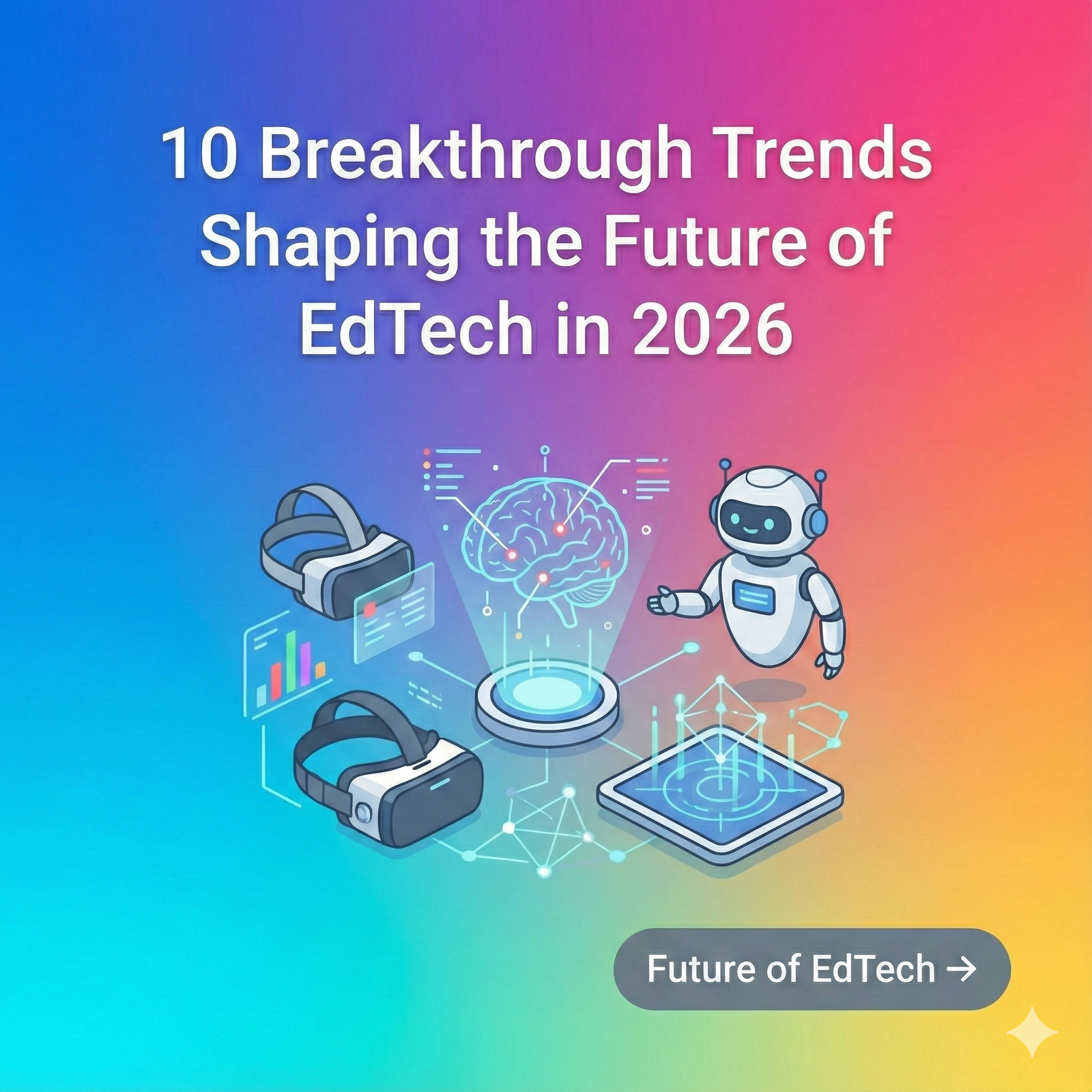
The Future of EdTech: Emerging Trends for 2026
EdTech is evolving faster than ever. With AI advancements, smarter learning ecosystems, and more intuitive digital experiences, 2026 is shaping up to be a landmark year for innovation in education and corporate training.
This guide explores the most important trends shaping the future of learning — and how organizations can prepare for what comes next.
Why 2026 Is a Transformative Year for EdTech
Faster Innovation Cycles
New EdTech tools are emerging every month, each bringing new features, smarter AI models, and deeper analytics capabilities.
Higher User Expectations
Learners want personalized, engaging, and intuitive experiences.
L&D teams want flexibility, automation, and clear data insights.
Leaders want results they can measure.
2026 is the year these goals finally align.
Trend 1 — AI-Driven Personalization at Scale
AI has become the backbone of modern EdTech.
Smart Recommendations
Learners receive tailored suggestions based on:
-
skill needs
-
performance
-
behavior patterns
-
learning goals
Adaptive Learning Engines
Courses shift automatically:
-
difficulty adjusts
-
pacing changes
-
content reorders itself
Artificial intelligence makes learning personal, relevant, and efficient.
Trend 2 — Intelligent Microlearning Experiences
Microlearning continues to dominate, but now it’s smarter.
Short-Form, High-Value Content
Learners want fast, focused training that fits their workflow.
On-Demand, Workflow-Based Learning
Training opens exactly when:
-
someone needs help
-
someone struggles
-
someone starts a new task
Microlearning becomes part of the workday—not separate from it.
Trend 3 — Scenario-Based and Simulation Learning
Scenario-based training is becoming essential for building real-world confidence.
Realistic Decision-Making Practice
Learners practice:
-
conversations
-
choices
-
troubleshooting
-
leadership moments
Immersive Learning Without Hardware
Thanks to AI and lightweight tools, simulations no longer require VR headsets.
These experiences mirror real decisions — making training more memorable.
Trend 4 — Voice and Natural Language Interfaces
Voice tools are entering the EdTech space.
Conversational Learning
Learners interact with:
-
chat-based coaching
-
voice-driven practice
-
instant explanations
Voice-Activated Training Paths
“Show me how to do this” becomes a new learning command.
This reduces friction and increases accessibility.
Trend 5 — Data-Driven Learning Ecosystems
Learning is no longer about completions — it’s about insights.
xAPI and LRS Adoption
Organizations now track deeper behaviors:
-
decisions
-
actions
-
timing
-
engagement
Real-Time Skills Dashboards
Leaders see:
-
skill gaps
-
progress
-
performance trends
-
readiness levels
Better data leads to better learning decisions.
Trend 6 — Micro-Animations & Advanced UI Motion Design
Interfaces are becoming more interactive.
Subtle Visual Responses
Buttons react.
Cards tilt.
Menus animate.
These micro-animations guide learners effortlessly.
Engaging Micro-Interactions
Small details improve:
-
navigation
-
feedback
-
engagement
-
retention
This makes training feel modern and polished.
Trend 7 — 3D Elements and Lightweight Immersive Media
3D Visuals Without VR
3D graphics appear in:
-
dashboards
-
lessons
-
activities
-
feedback screens
Enhanced Mobile Engagement
3D interactions can be light, smooth, and accessible on any device.
Immersion is now mobile-first.
Trend 8 — Human-Centered EdTech
Technology is becoming more intuitive and learner-focused.
Intuitive Design
Clean layouts help reduce cognitive load.
Accessible Learning for All
2026 emphasizes:
-
WCAG compliance
-
screen reader support
-
captions & transcripts
-
keyboard navigation
Inclusive design unlocks better learning for everyone.
Trend 9 — Security, Compliance & Data Ethics
As AI grows, so does the need for ethical transparency.
Privacy-first Learning Systems
Platforms now:
-
encrypt more data
-
simplify controls
-
give learners insight into data use
Transparent AI in Education
Learners want to know:
-
what AI is doing
-
why it made a recommendation
Trust becomes a key differentiator.
Trend 10 — Open Ecosystems & API-Driven Platforms
Modular Architecture
Organizations can mix tools:
-
LMS → LRS
-
microlearning → scenario builders
-
HR systems → analytics dashboards
Seamless Integrations
APIs help data flow smoothly across tools, building a unified learning ecosystem.
In Practice: How These Trends Show Up in Real Work
Insights from My Portfolio Projects
Across my LMS, microlearning, LRS, and scenario-based projects, these trends already appear:
-
adaptive microlearning
-
AI-powered analytics
-
decision-based simulations
-
data-driven dashboards
-
modern UI with subtle animations
These aren’t “future” concepts — they’re becoming standard expectations.
FAQs — Future EdTech Trends
1. Which trend will impact L&D the most?
AI-driven personalization.
2. Will microlearning still matter in 2026?
Absolutely — especially adaptive microlearning.
3. Are simulations expensive to build?
Not anymore. AI reduces cost and development time.
4. Does every LMS support xAPI?
No — choose platforms with LRS compatibility.
5. Do 3D elements require VR?
No — modern tools create lightweight 3D visuals.
6. How should companies prepare for 2026 trends?
Modernize tools, adopt data standards, and incorporate AI gradually.
Conclusion: Build a Future-Ready Learning Ecosystem
2026 marks a major shift in how we design, deliver, and measure training. With AI-powered personalization, smarter microlearning, immersive scenarios, voice interfaces, and advanced analytics, learning is becoming more adaptive, accessible, and effective.
Organizations that invest early will build learning ecosystems that feel modern, intuitive, and impactful — setting their teams up for long-term success.
🔗 External Link
Explore additional EdTech insights:
https://www.edtechmagazine.com/